If your drain keeps backing up and a plumber mentions your "sewer lateral," you're probably about to learn something most Stockton homeowners never think about until there's a problem. That pipe is yours. Not the City's. And when it fails, there are rules in Stockton that decide what happens next.
Here's the short version of what you need to know before you spend a dollar on a repair. At Stockton Drain Pros, we work on these lines every day, and a little knowledge up front saves homeowners real money.
What a Sewer Lateral Actually Is
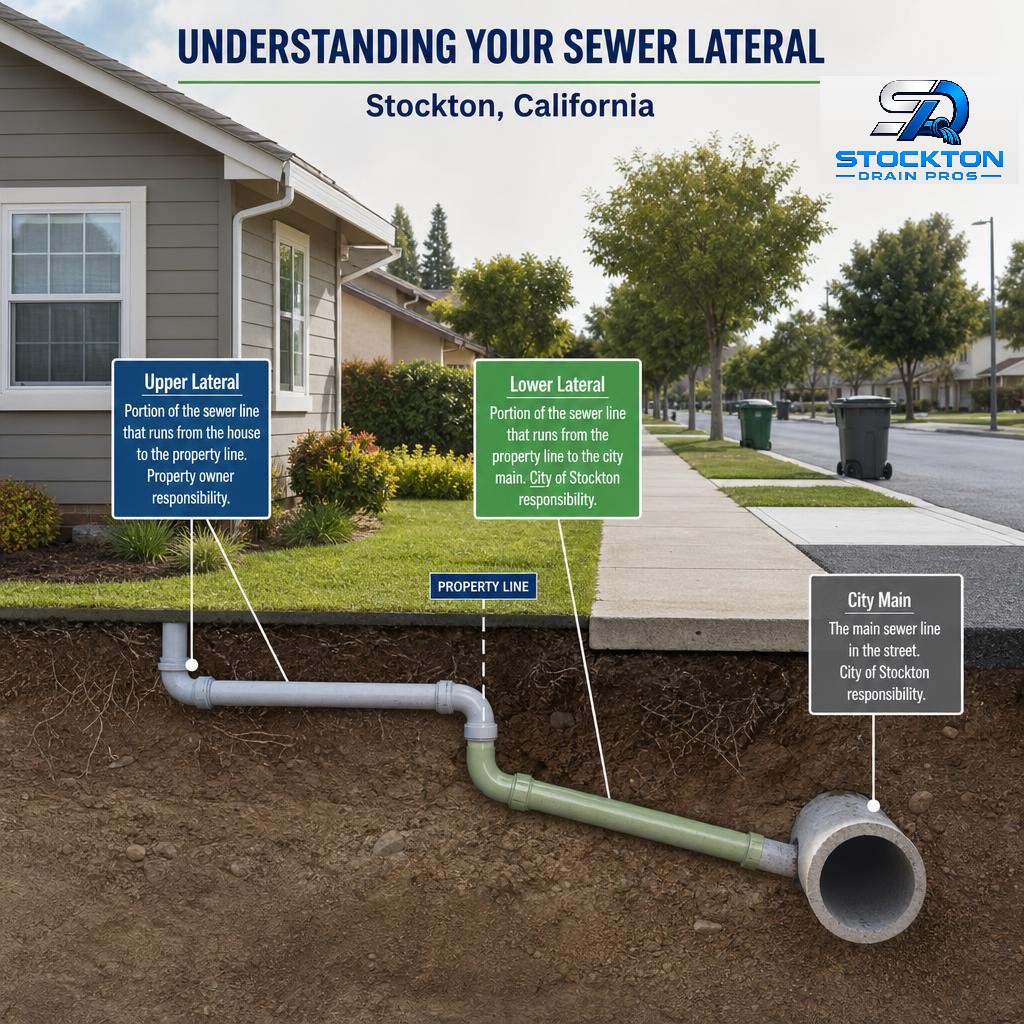
Your sewer lateral is the private pipe that carries waste from your house out to the City's main sewer line in the street. Think of it as the connector between your home and the public system.
In Stockton, the part closest to your house is called the upper lateral. That section is your responsibility. Most people assume the City handles everything underground. It doesn't. The pipe running across your yard belongs to you, and so does the cost of fixing it.
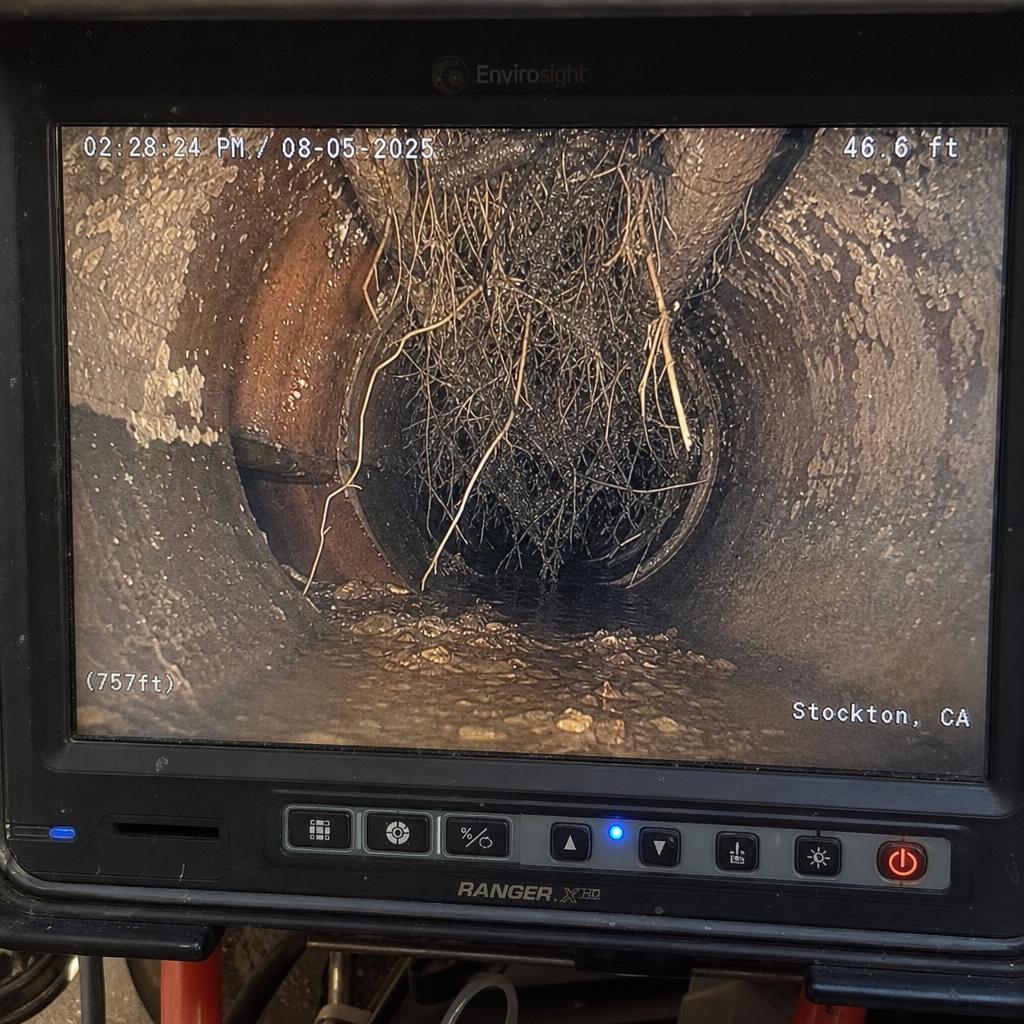
That matters because a lot of drain problems aren't really clogs. They're lateral problems. Roots, cracks, collapsed sections, and pipe bellies all show up first as slow drains or backups, then turn into something far more expensive if you wait.
Who's Responsible in Stockton
The City of Stockton has an actual ordinance covering this, Chapter 13.50 of the municipal code. It spells out that property owners have to test, inspect, maintain, repair, or replace their privately owned upper sewer laterals.
The rule has teeth after a sewer overflow. If your lateral causes a sanitary sewer overflow, the City can require you to bring that pipe up to current code. Not patch it. Bring it to code. So a small problem you ignored for two years can suddenly become a mandatory repair on the City's timeline, not yours.
This is exactly why we tell people not to sit on recurring backups, especially in older parts of town. A camera inspection now is cheap. A code-mandated replacement later is not.
The Permit Rule Most People Miss
You can't just dig up your lateral and fix it. Stockton requires the proper plumbing and sewer permits before any work on an upper lateral, and a City inspector has to sign off when the job is done. You keep that signed inspection card as proof the work was completed correctly.
The permitting path in San Joaquin County runs through a few offices. You'll need a Sanitation Permit from the Environmental Health District, plus a plot plan signed by the Department of Public Works, before the Building Inspection Division will issue the plumbing permit. Public Works, over on East Hazelton Avenue, also keeps records on where your lateral actually runs underground, which saves a lot of guesswork.
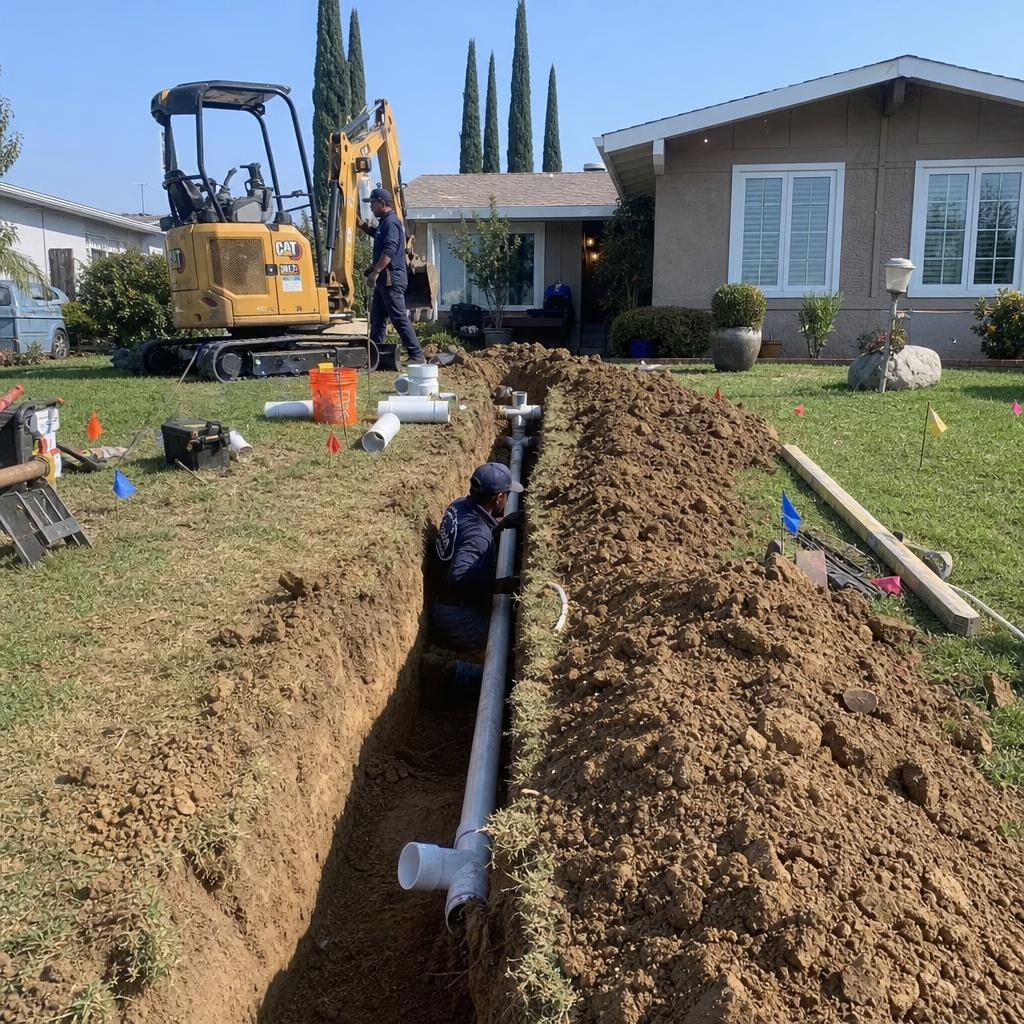
It sounds like a lot. For a homeowner doing this cold, it is. A licensed contractor handles this process all the time, which is one good reason not to treat a lateral repair as a weekend project.
The 45-Day Root Rule
This one catches people off guard. If the City determines that tree roots are growing from your upper lateral into the lower lateral, you generally get 45 days to deal with it. That means either removing the roots and making repairs to stop it from happening again, or setting up a compliance schedule with the City.
Forty-five days moves fast when you're lining up a contractor, pulling permits, and scheduling the actual work. Roots don't announce themselves either. They creep into pipe joints silently for years before you notice a single slow drain.
If you've got mature trees and an older home, this is the rule to keep in the back of your mind. A camera inspection tells you whether roots are already in there long before the City ever gets involved, and hydro jetting with a root-cutting nozzle is the most effective way to clear them once they're found.
Why Older Stockton Homes Get Hit Hardest
Numbers help here. The median Stockton home was built around 1980. But the downtown core is a different story, with a median build year closer to 1957. That puts a huge share of central-Stockton sewer lines at 65 years old or more.
Pipe from that era is usually clay or cast iron. Both materials corrode, crack, and pull in roots at a far higher rate than the PVC used in newer subdivisions. So if your home predates 1970 and the lateral has never had a camera run through it, you're basically driving on tires with unknown tread. We cover this in depth in our guide to why older Stockton homes have more drain problems.
Newer neighborhoods aren't immune, to be clear. They just fail differently, usually from grease buildup and hard water scale rather than roots and collapse. Either way, the fix starts with knowing what's actually in the ground.
What to Do Before You Pay for Any Repair
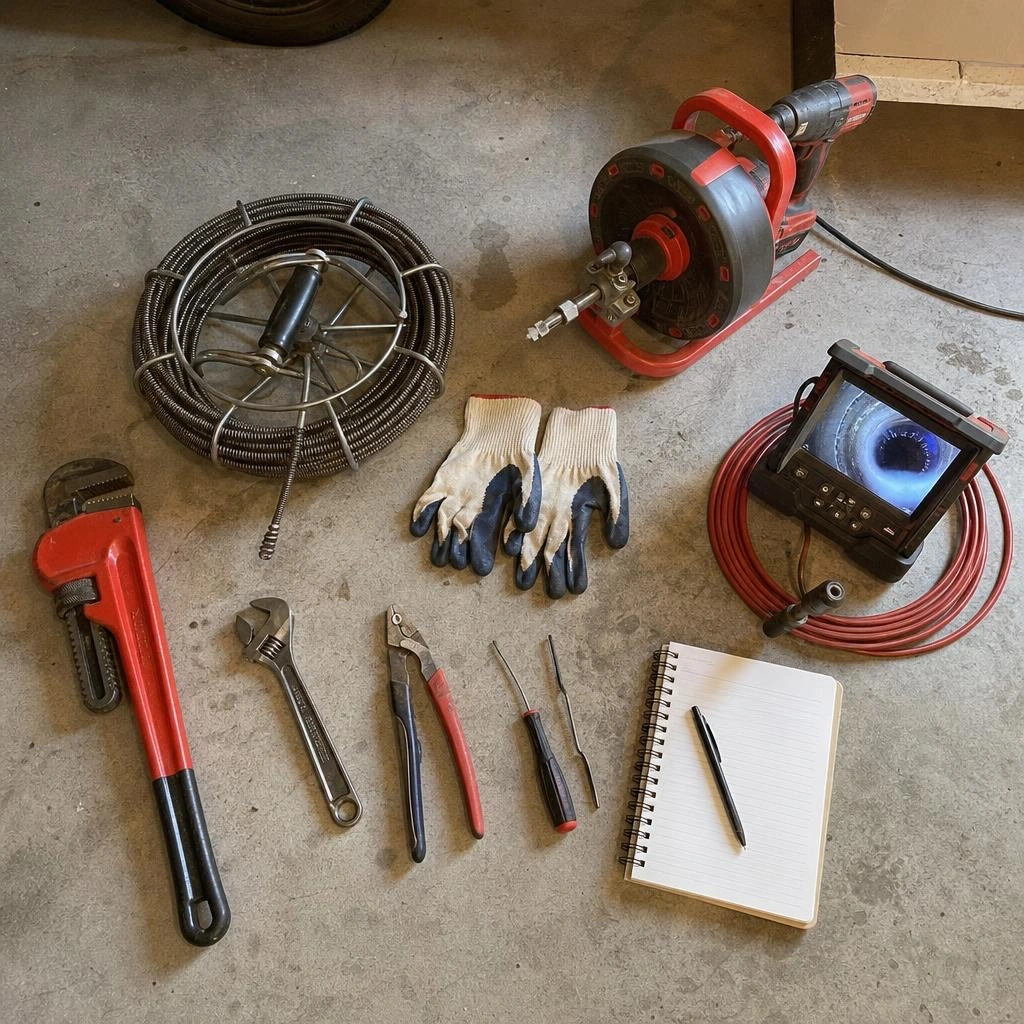
Don't authorize a dig or a quote for a full replacement until someone has actually looked inside the pipe. A sewer camera inspection runs in the range of $150 to $350 around here, and it's the single best money you can spend before a major sewer decision. It shows you the real problem instead of a guess.
A camera tells you three things that change everything: where the problem is, what's causing it, and whether you need a spot repair or a full replacement. Plenty of homeowners get quoted thousands for a replacement when a targeted repair or a hydro jetting would have solved it. The footage settles that argument.
If you're buying a home in Stockton, especially anything built before 1980, get the lateral inspected before you close. A standard home inspection skips the sewer line entirely. A $200 inspection now can save you a five-figure surprise after you own the place.
Recurring backups in an older Stockton home?
Start with a camera inspection. We show you exactly what's in the pipe, what's causing it, and whether you need a spot repair or a full replacement, before the City is ever involved.