Stockton is one of California's oldest cities. Founded in 1850, it developed rapidly through the late 19th and early 20th century, and much of the sewer infrastructure installed during that period is still in the ground today. Homes in Downtown Stockton, South Stockton, Miracle Mile, and Lincoln Village frequently have sewer lines dating to the 1920s, 1930s, and 1940s.
These pipes were built well for their time. But clay and cast iron have a designed service life. Many of those pipes have reached, and in some cases exceeded, theirs. The result is a higher frequency of drain problems in Stockton's established neighborhoods compared to newer construction elsewhere in the city and region.
If you own an older Stockton home and deal with recurring drain issues, this is not a housekeeping problem. It is an infrastructure problem. At Stockton Drain Pros, we work on these older lines constantly, and understanding what is in your pipes changes how you approach solving it.
What Pipe Materials Are in Your Walls and Yard?
The material of your sewer line changes everything about how it ages, what problems it develops, and what treatment is appropriate. Stockton's residential sewer infrastructure falls into three broad eras:
If you are unsure what your home has, the build date is the best first indicator. A sewer camera inspection confirms exactly what material is present, its current condition, and where any active problems are developing.
The Five Problems That Affect Older Stockton Pipes Most
1. Tree Root Intrusion
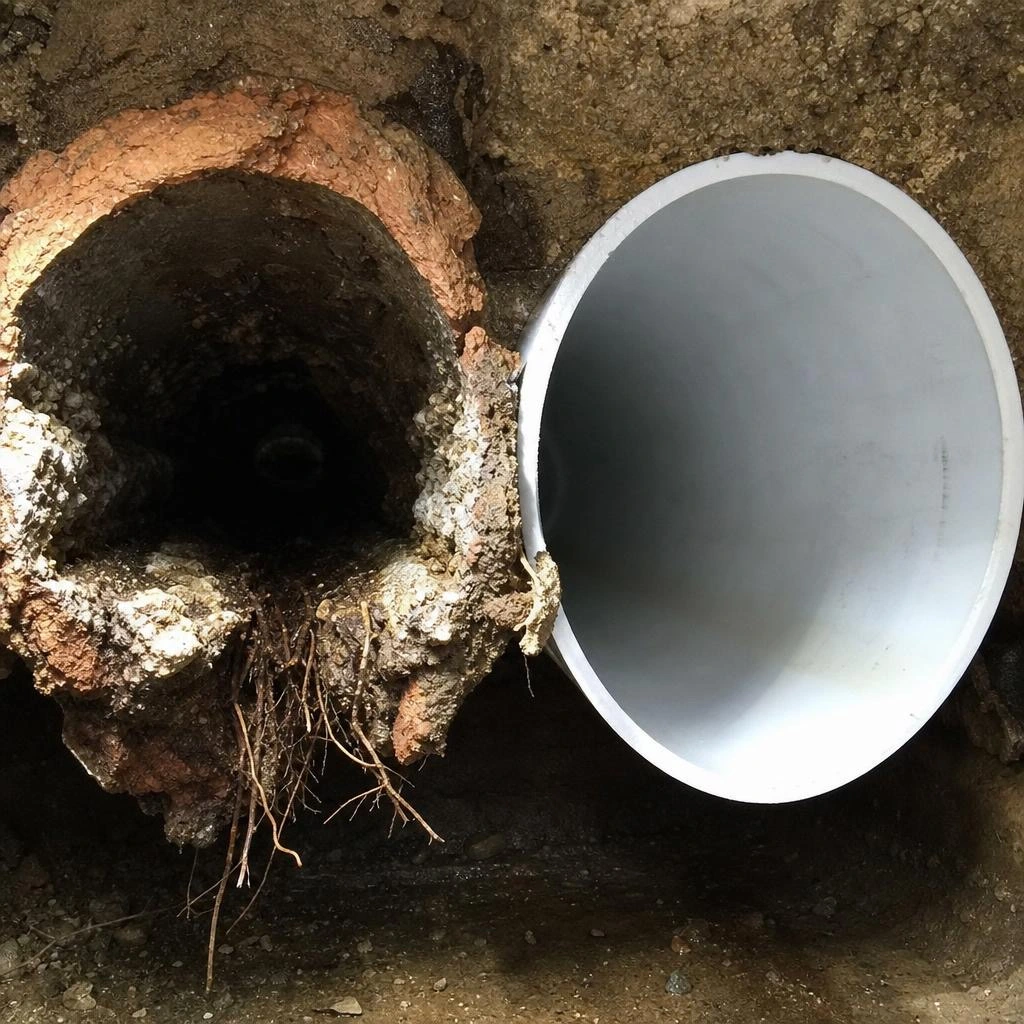
This is the most common sewer line problem in Stockton's established neighborhoods, and the most misunderstood. Tree roots do not break into pipes. They enter through cracks, corroded sections, and separated joints that age creates. Once inside, roots grow toward moisture and light, expanding until they fill a significant portion of the pipe cross-section.
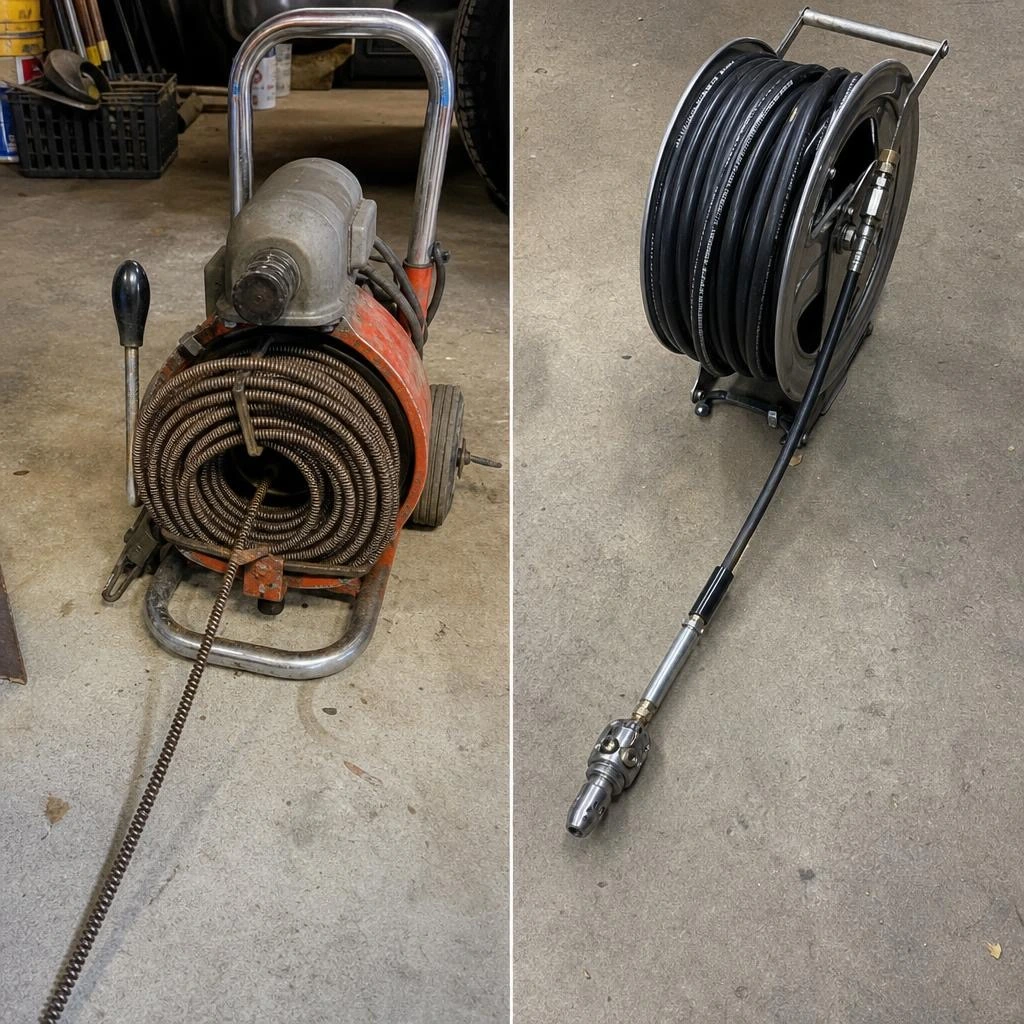
In older Stockton neighborhoods, mature oaks, elms, and ornamental trees have root systems that span entire blocks. Clay pipes from the 1920s through 1940s crack and separate predictably at this age, and Stockton's established tree canopy provides abundant root pressure. Root intrusion is one of the leading causes of sewer line failures in older urban neighborhoods. Once roots are inside, hydro jetting with a root-cutting nozzle is the most effective way to clear the line.
2. Pipe Corrosion and Scale Buildup
Cast iron pipes corrode from the inside over decades. The process is slow but cumulative: interior pipe walls rust and pit, creating rough surfaces that accumulate grease, scale, and debris at a much higher rate than smooth new pipe. Combined with Stockton's hard water, approximately 15 to 18 grains per gallon of mineral hardness, calcium and magnesium deposits compound the buildup problem.
A 50-year-old cast iron pipe can have its effective flow diameter significantly reduced by corrosion and scale accumulation alone, before any clog develops. That restricted pipe requires far less triggering material to block completely compared to a new pipe. Regular main line cleaning on these older lines is one of the simplest ways to delay a full failure.
3. Pipe Bellies from Ground Settling
Over decades, the soil under sewer pipes settles and shifts. When the support under a pipe section drops, that section sags below its designed slope, creating what is called a pipe belly. Water and solids collect in the belly rather than flowing freely downhill to the main. The pooling creates a persistent accumulation point for debris.
Pipe bellies cause recurring slow drains and recurring odor but are completely invisible without a camera inspection. They cannot be resolved with cleaning alone, the structural sag requires pipe repair to restore proper flow slope.
4. Offset or Separated Joints
Clay and cast iron pipes are installed in sections connected by joints. Ground movement over decades shifts these joints, offsetting the pipe sections and creating ledges and gaps in the pipe interior. Ledges catch toilet paper, solids, and debris. Gaps allow root entry and groundwater infiltration. Offset joints are among the most common findings on camera inspections of older Stockton homes.
5. End-of-Life Pipe Deterioration
Clay sewer pipes have a designed service life of 50 to 60 years. Cast iron lasts approximately 50 to 80 years. Many pipes in Stockton's pre-1960 neighborhoods have reached or exceeded their service life. At this stage, the pipe itself is the problem, not a specific clog, root intrusion, or joint failure. Increasingly frequent drain problems in a home built before 1960 that has never had a camera inspection often indicate a pipe system approaching end-of-life, where cumulative issues are accelerating.
Own an older Stockton home? Start with a camera inspection.
A camera inspection shows your pipe's current condition, identifies active problems, and gives you a maintenance plan, before an emergency forces the issue.
Which Stockton Neighborhoods Are Most Affected?
Not every Stockton neighborhood carries the same drain risk. The areas with the highest concentration of pre-1960 sewer infrastructure, and therefore the highest rate of drain problems in the homes we service, are:
Downtown Stockton, Some of the city's oldest residential and commercial stock. Clay pipe infrastructure from the 1920s through 1940s is common and frequently in active decline.
South Stockton, Dense older housing stock with aging infrastructure and high rates of root intrusion from established street trees and ornamentals.
Miracle Mile area, Mid-century homes in the 1940s through 1960s, primarily cast iron pipe that is at or near end of service life.
Lincoln Village, Older established neighborhood with mature tree canopy and mid-century cast iron infrastructure.
Morada, Older rural-adjacent neighborhood with mix of clay and cast iron depending on parcel.
Brookside and Spanos Park, Primarily newer construction with modern PVC. Lower root intrusion risk, but grease and hard water scale are still common concerns.
What Older Stockton Homeowners Can Do
The difference between homeowners who have recurring drain emergencies and those who do not is usually not luck, it is proactive maintenance matched to their pipe's actual condition. When something does go wrong on a holiday or in the middle of the night, our 24/7 emergency drain service covers all of Stockton.
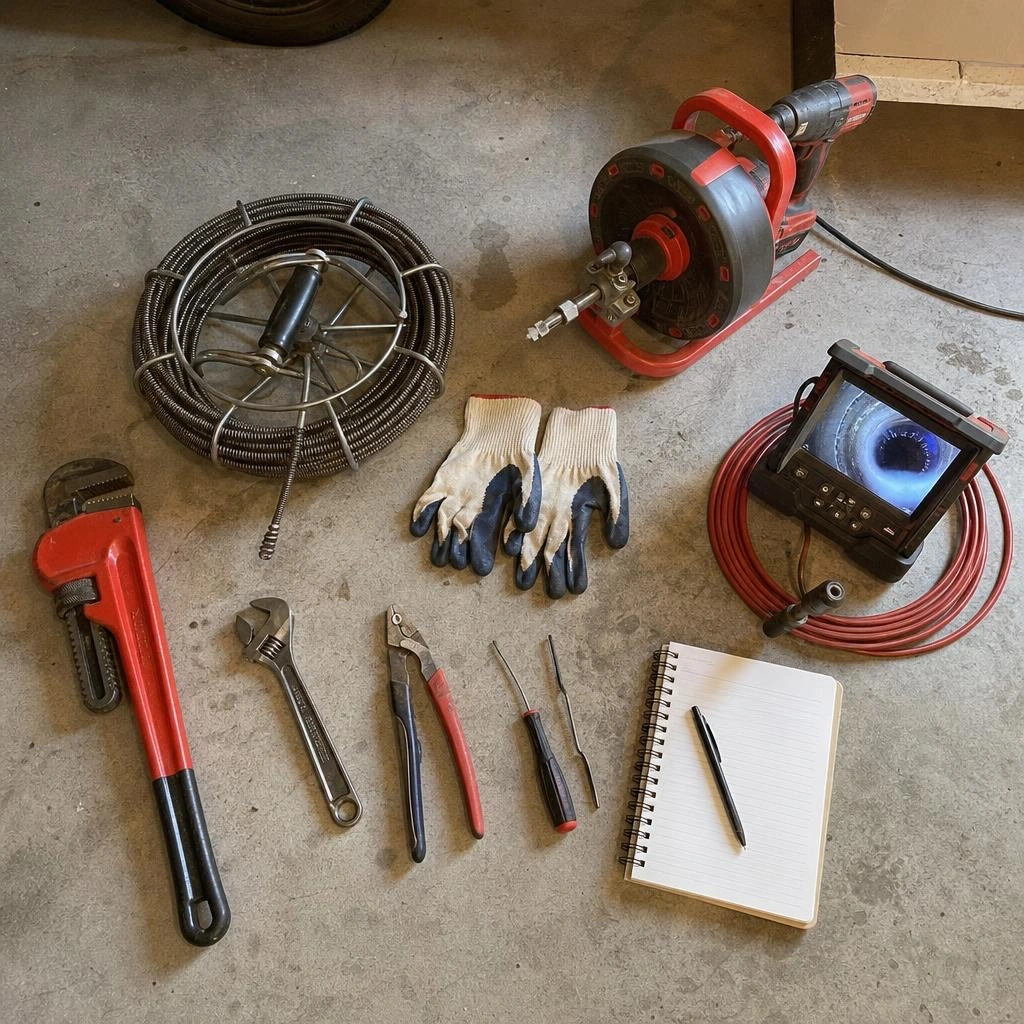
Sewer Camera Inspection
Monitors pipe condition between cleaning cycles. Catches developing cracks, root entry, and belly formation before they cause emergencies.
Hydro Jetting
Removes grease, mineral scale, and root debris from pipe walls completely. Prevents gradual restriction from leading to full blockage.
Root Treatment
After camera identifies root entry points, targeted pipe repair closes the openings and prevents regrowth. Jetting alone does not stop future root entry.
Targeted Pipe Repair
Camera-identified cracks, collapsed sections, and bellies should be repaired before they cause backup events. Spot repair costs far less than emergency remediation.
The most common mistake older Stockton homeowners make is treating each drain problem reactively, calling for a snake when the drain backs up, getting temporary relief, and waiting for the next incident. A single camera inspection replaces years of reactive calls with a clear picture of what is actually in the ground and what it needs.
When Is It Time to Consider Pipe Replacement?
Not every old pipe needs to be replaced. Many aging clay and cast iron pipes in Stockton are structurally sound enough to continue serving with proper maintenance. But some have deteriorated past the point where cleaning and spot repair are cost-effective. Signs that a full sewer line assessment for potential replacement is warranted:
Recurring emergencies more than once per year despite professional cleaning. Camera inspection shows collapse or severe deterioration along multiple sections rather than one isolated problem. The home is more than 70 years old and has never had a camera inspection or any sewer work. Root intrusion is present at multiple entry points throughout the line rather than one location.
Modern PVC replacement pipe is significantly more durable than clay or cast iron, more resistant to root intrusion, corrosion, and ground movement, and lasts 50 to 100 years with normal maintenance. In the right situation, replacement is the most cost-effective long-term decision.
Stockton's Pipes, By the Numbers
The reason older Stockton homes see more drain trouble comes down to timing and materials. The median Stockton home was built around 1980, and roughly 14% of local homes predate 1950. That means a large share of the city's housing was plumbed with the clay, cast iron, and Orangeburg sewer pipe that was standard before modern PVC — materials that are now at or beyond their designed lifespans.
Sewer Pipe Material Reference Chart
Here is how the common sewer-pipe materials compare, and why the older ones fail. If your home was built before the late 1980s, your sewer lateral is most likely clay or cast iron:
Sources: sewer pipe lifespan ranges per plumbing/industry engineering references; Stockton housing-age data per U.S. Census Bureau QuickFacts; tree-root intrusion research via the USDA Forest Service. See also our guide to tree roots in your sewer line.