Two tools. One goal. Different outcomes. Drain snaking and hydro jetting both clear drain problems, but they do it in fundamentally different ways, and choosing the wrong one costs you money either immediately or in the next few months when the clog returns.
Quick answer: Snaking runs a cable to punch through a clog and restore flow fast and cheap, best for a simple, one-time blockage. Hydro jetting ($350 to $650) uses high-pressure water to scour the entire pipe wall clean, best for grease, tree roots, or clogs that keep coming back.
At Stockton Drain Pros, we clear Stockton drains every day using both methods. Here is an honest assessment of when each is the right call, what the cost difference looks like, and how to make the decision without being upsold or undersold on a service.
What Is Drain Snaking?
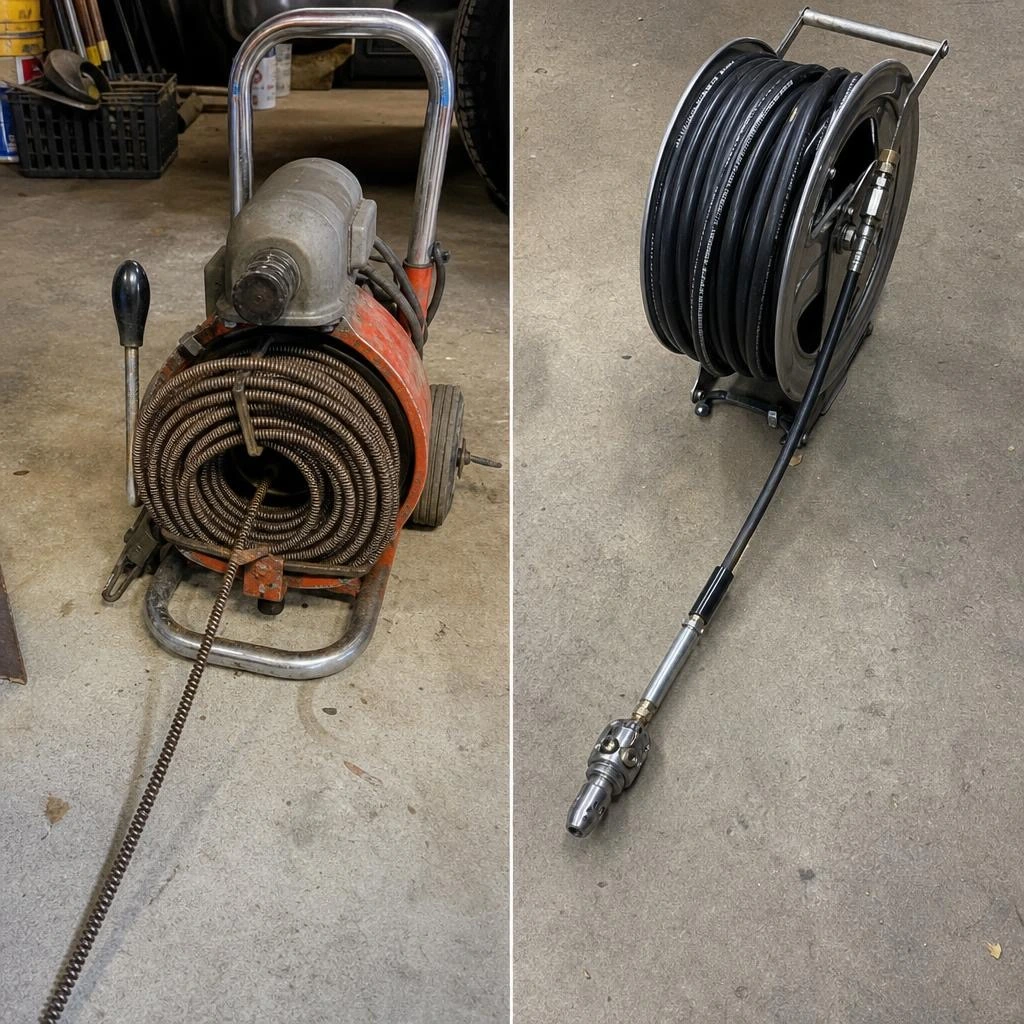
A drain snake, also called a drain auger, is a motorized metal cable fed into a drain pipe. The cable either breaks through the clog with a rotating head or hooks into the blockage and pulls it out. The job takes 20 to 45 minutes in most cases, and the drain flows again.
What snaking does not do: clean the pipe walls. After a snake clears the path, the grease, soap scum, hair residue, and mineral scale that lined the pipe and caused the clog is still there, just with a channel through it. That remaining buildup continues to accumulate. The same drain clogs again in weeks or months, not years.
Snaking is the right tool for a discrete, first-occurrence clog in a pipe without significant wall coating. It is fast, effective, and appropriately priced for what it accomplishes. See our standard drain cleaning service in Stockton for details on how we handle these calls.
What Is Hydro Jetting?
Hydro jetting inserts a specialized flexible hose with a nozzle into the drain line. The nozzle delivers pressurized water at 1,500 to 4,000 PSI, the pressure varies based on pipe size and material. The forward-facing jets cut through blockages. The rear-facing jets blast the pipe walls as the nozzle is pulled back out, scouring every surface of the interior clean.
The result is a pipe that looks, and performs, like new. Grease is emulsified and flushed out. Mineral scale is dislodged and carried downstream. Root debris is cut and flushed. Hydro jetting removes everything, not just the clog.
Hydro jetting scours the full pipe wall clean of grease and scale, while motorized snaking mainly breaks through the clog and leaves the walls coated. Results last an average of 3 to 5 years in residential pipes under normal use, versus 6 to 12 months for snaking in the same conditions.
Side-by-Side Comparison
When Snaking Is the Right Call
It is the first time this drain has clogged
- A single fixture is blocked for the first time with no history of problems
- The clog is recent, not the result of months of slow buildup
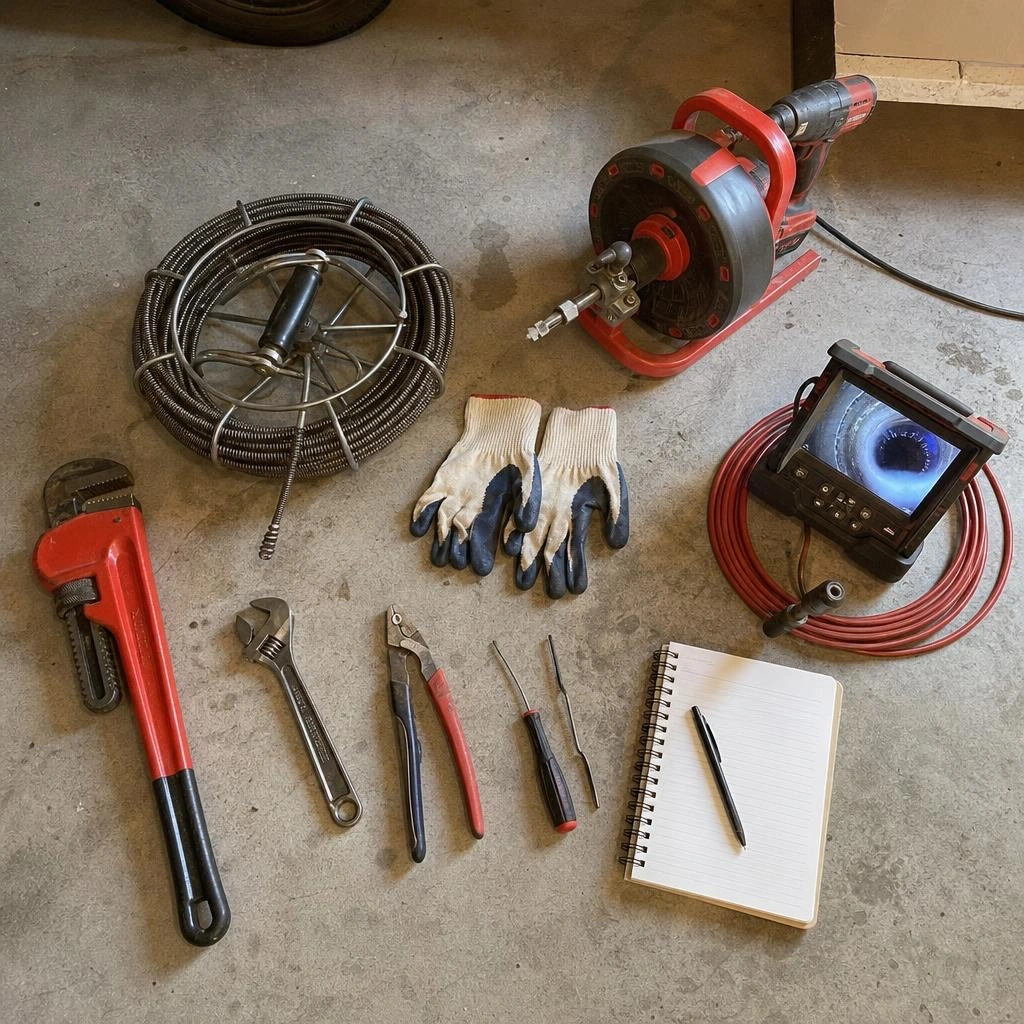
- A camera inspection (if done) shows no significant wall coating
- The pipe material and age are in good condition without root risk
- You need a fast, cost-effective solution for a straightforward problem
Snaking is not a lesser service, it is the appropriate service for simple clogs. We use it every day on first-occurrence kitchen and bathroom drains throughout Stockton as part of our routine drain cleaning calls. The problem is using it repeatedly on a clog that comes back, or using it when a camera clearly shows grease coating that snaking cannot remove.
When Hydro Jetting Is the Right Call
The problem keeps coming back, or the camera shows why
- The same drain has been snaked before and clogged again within months
- A camera shows grease or scale coating the pipe walls
- Tree root intrusion is present in the sewer line
- The kitchen drain is slow despite no discrete clog, grease buildup
- You want preventive maintenance that lasts years, not months
- You are preparing to sell or buy a home and want clean pipe confirmed
Not sure which one your drain needs?
We diagnose on-site before recommending anything. Call now and we will tell you which method is right, no upsell, no pressure.
The Grease Problem: Why Snaking Keeps Failing Your Kitchen Drain
Grease is the reason most Stockton homeowners end up calling us multiple times for the same kitchen drain. Cooking grease, bacon fat, and cooking oil do not flush away. They cool inside the pipe and solidify into a sticky coating on the pipe walls. That coating accumulates layer by layer, every time grease goes down the drain, another film bonds to the last one.
Snaking punches a channel through the accumulated grease, restoring flow. But it does not remove the grease from the pipe walls. Within weeks, the channel closes again as new grease bonds to the existing coating. Hydro jetting emulsifies the grease with hot, high-pressure water and flushes the entire coating out of the pipe. After jetting, the pipe walls are clean and new grease takes significantly longer to accumulate to the point of restriction.
For Stockton homeowners with kitchen drains that slow every few months, hydro jetting typically pays for itself in the second year compared to repeated snaking visits.
Root Intrusion: Why You Need Both Jetting and Camera Inspection
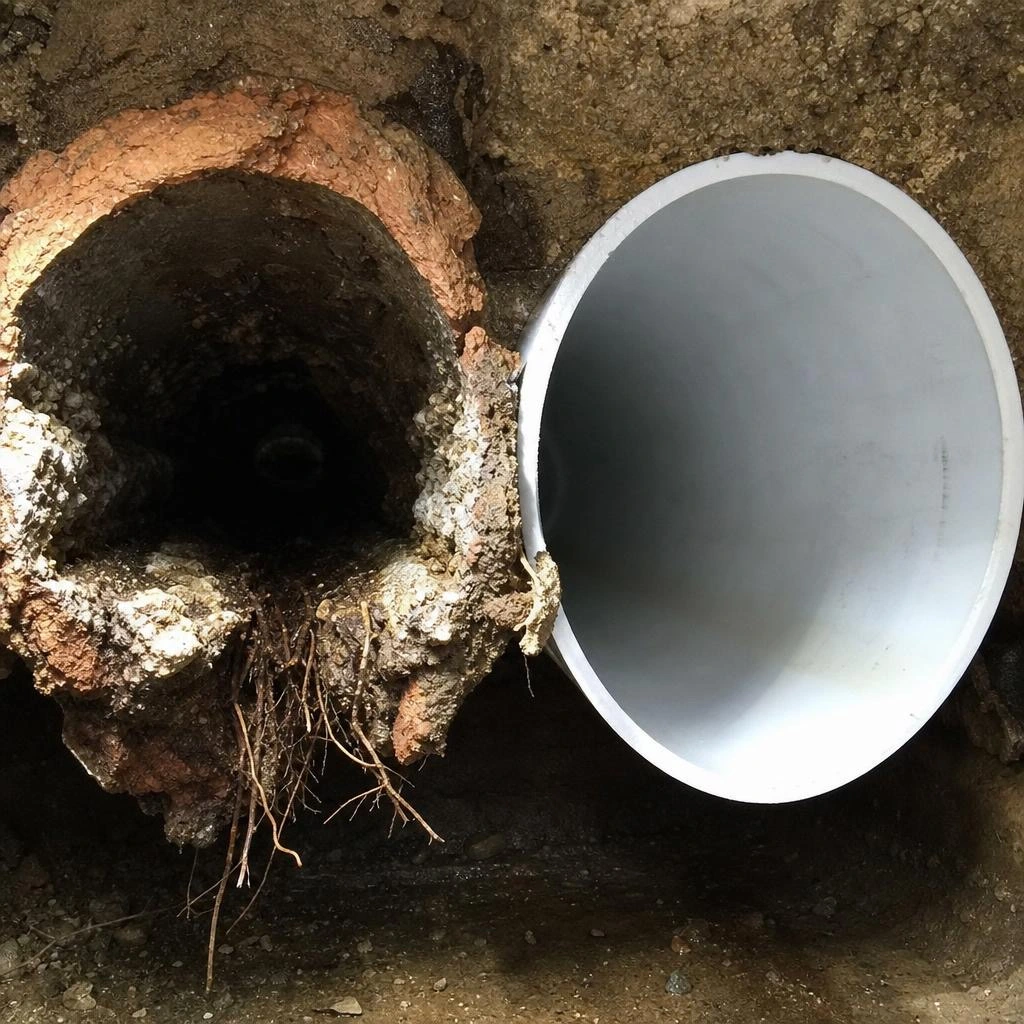
Tree root intrusion in Stockton's older neighborhood sewer lines is best treated with a root-cutting hydro jetting nozzle. The high-pressure water cuts through root masses and flushes the debris downstream. But, and this is important, hydro jetting addresses the roots that grew into the pipe. It does not seal the cracks or open joints that allowed root entry. When roots are causing repeated main line blockages, structural repair is often the longer-term answer.
A camera inspection after root jetting is essential. If the roots entered through a single crack or offset joint, that structural issue needs repair to prevent regrowth. Without repairing the entry point, roots return in 12 to 18 months. With the entry point repaired, the problem is solved permanently.